

Good morning and happy Holy Week!
Lets dive right in today with Matthew 26:17-30. This passage narrates the “Last Supper” between Jesus and the disciples before the crucifixion process began. You can also read accounts of the supper in Mark 14:12-26, Luke 22:7-38 and John 13 and 14.
Side note– I am throwing a ton of scripture at you today so if you don’t have time this morning to read it all, just just the verses down and dive into them throughout the day.
Something I found so neat in this passage was within the first verse(17), “On the first day of the Feast of Unleavened Bread, the disciples came to Jesus and asked, “Where do you want us to make the preparations for you to eat the Passover?” When I compared the stories in each book, all but John specifically mentioned the Feast of Unleavened Bread. This interested me, so I looked more into this particular Jewish tradition.
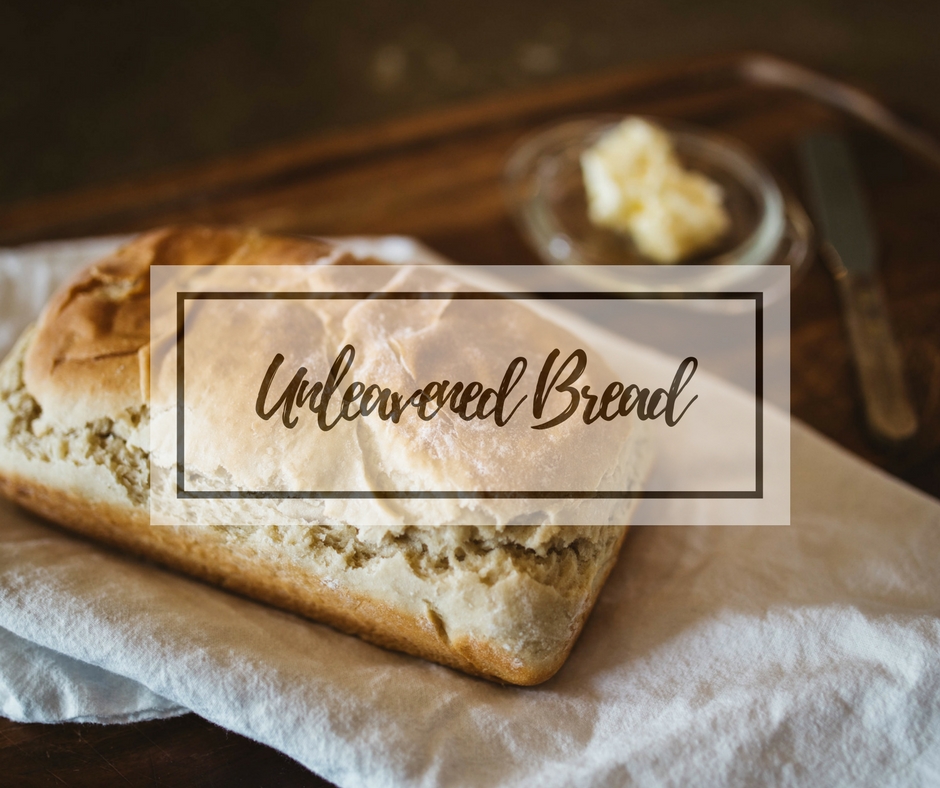
Turns out, the Feast of Unleavened Bread was a tradition adapted by the Jewish people to commemorate their deliverance from Egypt. Leaven is yeast. During this festival, bread would be made without yeast and no yeast was to be consumed in any Jewish household. Most households would even purge the home of all yeast containing products. When the Jews abruptly left Egypt, they did not even have time to allow their baking bread to rise. They gathered it, and fled. Yeast is what makes dough rise, so eating bread that has not risen is a symbolic of the deliverance from Egypt.
The most interesting part is what leaven symbolizes throughout scripture. In many passages, leaven, or yeast, is used to describe sin or falsehood. So, purging the household of yeast also symbolized purging of sin and falsehood. If you are wondering where on earth I am getting this information from (as you should be), I went ahead and listed a scripture chain below and a brief description of each:
Exodus 13:3-10: God commands the people to acknowledge their rescue from Egypt
Leviticus 23:4-7: Describes how the Festival of Unleavened Bread began and why.
Deuteronomy 16:3: Reminder of what the unleavened bread represents.
1 Corinthians 5:4-8: Parallels leaven to sin.
Matthew 16:5-12: Jesus compares yeast of the Pharisees to falsehood.
Matthew 26:26 says, “While they were eating, Jesus took bread, gave thanks and broke it, and gave it to his disciples saying, “Take and eat; this is my body.” The unleavened bread that he broke represented his body, his flesh. “..This bread is my flesh, which I will give for the life of the world” John 6:51. The timing of the Festival of Unleavened Bread was no coincidence.
The yeast-less bread that He broke for them represented His sinless body that was broken for us.
Oh, how I love Jesus, that he gave his sinless body to be broken for us over 2000 years ago so that we may spend eternity with him and have peace on this earth by his Holy Spirit. The Bible is a love letter from God, a how-to for earthly dwelling, and a beautiful and poetic piece of literature. Isn’t it amazing that God utilized metaphors so that we can attempt to understand His heavenly being with our human minds? What an author; he began shaping the story thousands of years before the climax! That is a true testament to his majesty.
 Morning Joy